Landscaping trends and practical garden planning for Melbourne homes.
Top 5 Landscaping Trends for 2026
Landscaping in Melbourne is changing. In 2026, homeowners want outdoor spaces that are practical, attractive and easy to maintain.
The shift is towards gardens that suit our local climate, use space well, and fit how people actually live. Below are the 5 biggest landscaping trends for 2026, plus simple ways to apply them to your own backyard.
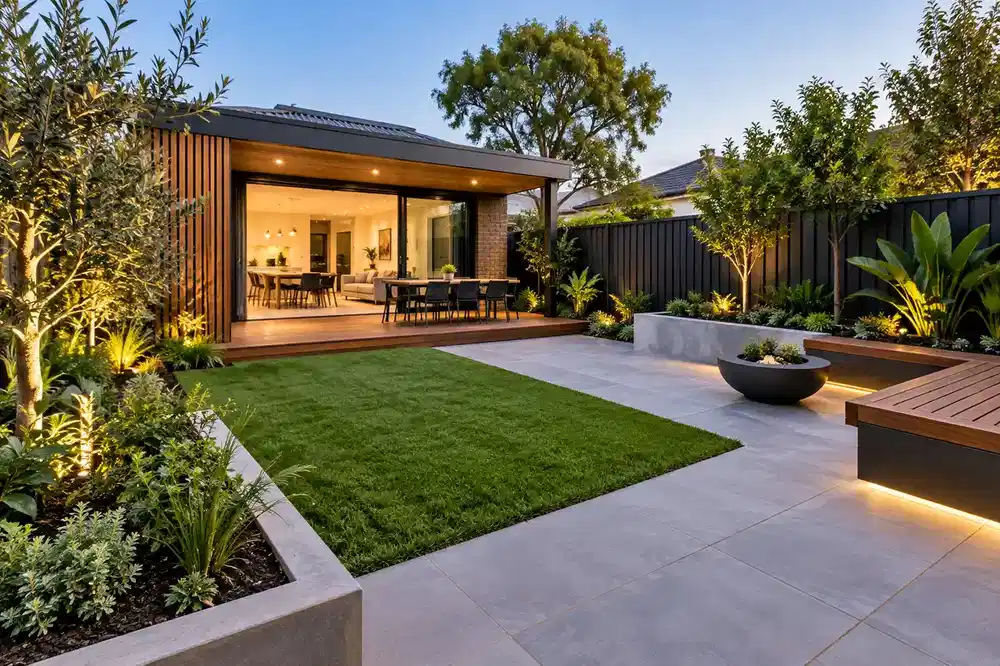
1. Low-Maintenance Landscaping
The biggest trend for 2026 is the shift to low-maintenance gardens.
Most Melbourne homeowners don't want to spend 3 or 4 hours every weekend mowing, weeding and pruning. A well-planned garden can look just as good with a fraction of that upkeep, sometimes cutting weekly garden time down to under an hour.
This isn't about doing less landscaping — it's about doing it smarter. The saving comes from decisions made before a single plant goes in the ground: right plant in the right spot, beds shaped so a mower or trimmer can actually reach them, and materials chosen to age well rather than need constant attention.
What makes a garden low maintenance?
There's no single formula, but 9 choices make the biggest difference:
- Hardy plants suited to Melbourne's climate
- Native and climate-suitable species
- A smaller lawn area
- Mulched garden beds
- Efficient drip irrigation
- Durable paving
- Clearly defined garden bed edges
- Low-growing groundcovers instead of lawn
- Simple, repeated planting patterns
The goal isn't to remove every plant or pave the whole yard. It's to make sure each part of the garden earns its place and is easy to look after.
A common mistake is choosing plants for how they look in a nursery pot rather than how they'll perform in your specific spot. A plant that needs constant water, feeding or pruning to survive isn't low maintenance just because it looked easy on the label.
Why is this trend growing?
A garden should support your lifestyle, not add another weekly chore. Choosing the right plants for your soil and sun, and designing garden beds properly from the start, cuts ongoing work significantly.
Good garden landscaping plans your lawn, beds and outdoor areas around how much time you actually want to spend on maintenance — not how much a display garden looks like it needs.
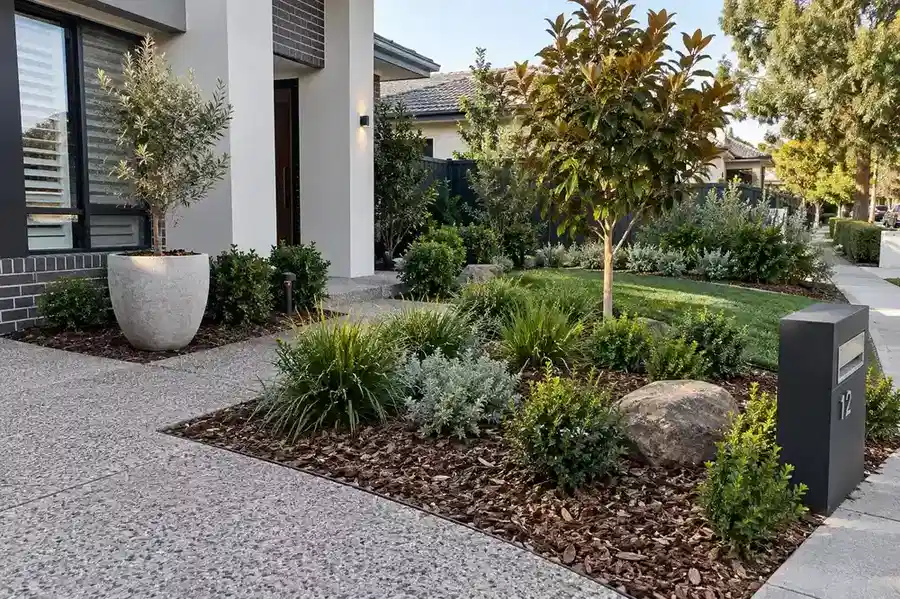
2. Native and Water-Wise Gardens
Water-wise landscaping is the second major trend for 2026.
More homeowners want gardens that perform well without constant watering. The right mix of plants, soil prep, mulch and irrigation makes this possible.
What does water-wise landscaping involve?
- Native plants
- Drought-tolerant species
- Mulched beds, 50–75mm deep
- Improved, well-draining soil
- Efficient irrigation on a timer
- Plants matched to sun or shade
- Good drainage
- Grouping plants with similar water needs
The aim isn't just using less water — it's using water where it does the most good.
Are native plants right for Melbourne gardens?
Often, yes — but not automatically. Soil type, drainage, sunlight, space and how much upkeep you want all affect which species will actually thrive.
Melbourne's east has heavier clay soil that holds water longer, while bayside suburbs like Brighton drain fast and dry out sooner. The right native species differs between the two.
Why does mulch matter?
A good layer of mulch protects soil, cuts water loss, and suppresses weeds. It also gives garden beds a clean, finished look while making them easier to maintain over time.
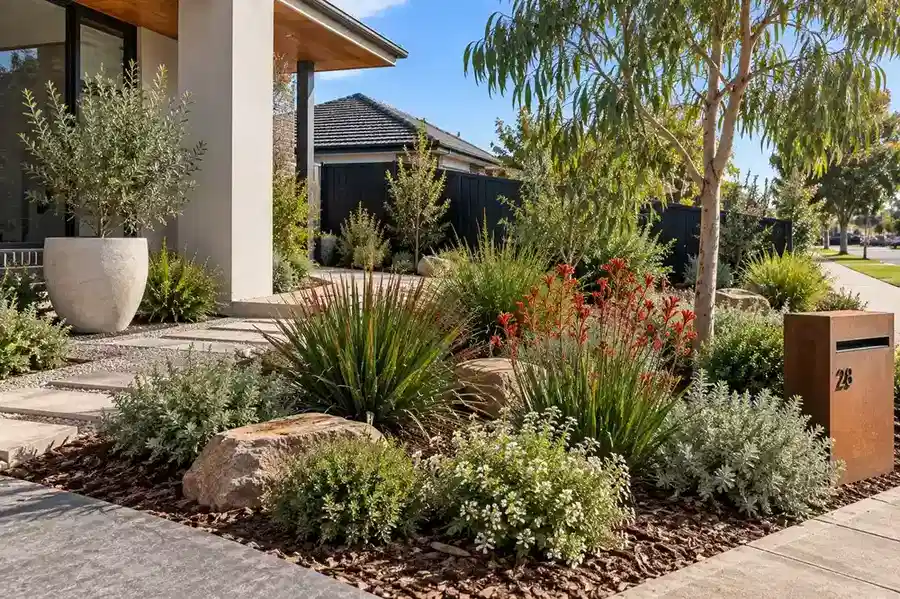
3. Outdoor Living and Entertaining Areas
In 2026, the backyard is becoming an extension of the house, not just a place for lawn.
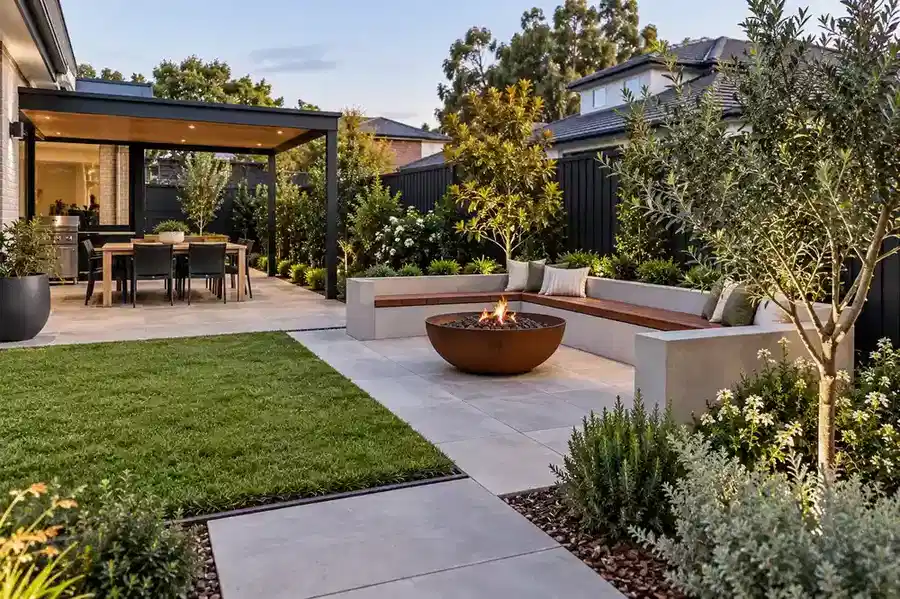
Instead of one large, underused space, gardens are being split into 2 or 3 practical zones — for dining, entertaining and relaxing.
Popular outdoor living features include:
- Timber or composite decking
- Paved entertaining areas
- Outdoor dining settings
- Comfortable seating
- Pergolas
- Outdoor kitchens
- Fire pits
- Garden pathways
- Feature planting
- Integrated lighting
The best outdoor areas connect naturally to the house. Door and window positions, existing trees, sun direction and access all need thinking through before construction starts.
How much space do you actually need?
Not much. Even a small Melbourne garden can usually fit 2 to 3 useful zones if the layout is planned well.
If you're planning an entertaining area, backyard landscaping brings planting, paving, lawn and other features together into one connected design, rather than treating each part as a separate job. For a raised outdoor space, decking can be built into the same plan.
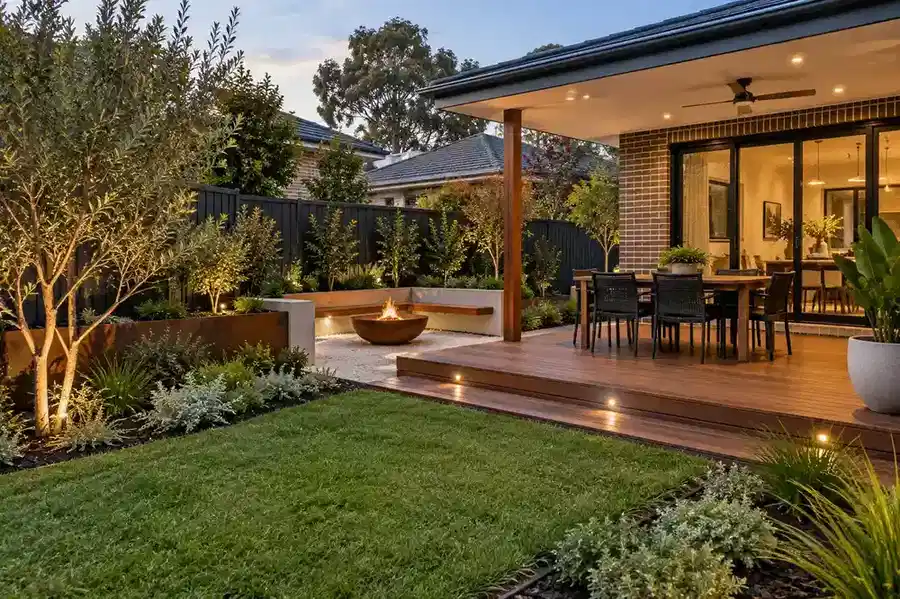
4. Less Lawn, More Functional Space
Large lawns aren't essential for every household anymore.
That doesn't mean lawn is disappearing — it means people are asking whether they need every square metre of it. Many homeowners are converting unused lawn area into something more useful.
What can replace unused lawn?
- Garden beds
- Native planting
- A paved entertaining area
- Decking
- A small vegetable patch
- Outdoor seating
- A feature tree
- A kids' play area
- Pathways
- Low-maintenance ground cover
The right mix depends on how your household actually uses the backyard. A family with young kids might keep a full lawn for play; another household might prefer 2 garden beds and a dining area instead.
Does a smaller lawn mean less work?
Usually. Cutting lawn area by even a third can meaningfully reduce mowing and watering time. But lawn still has a place in a well-designed garden — the goal is the right amount, not zero, just because it's trending.
If you want to keep a healthy lawn while upgrading the rest of the garden, proper turf installation starts with correct ground prep, so the lawn actually holds up.
5. Natural Materials and Strong Structure
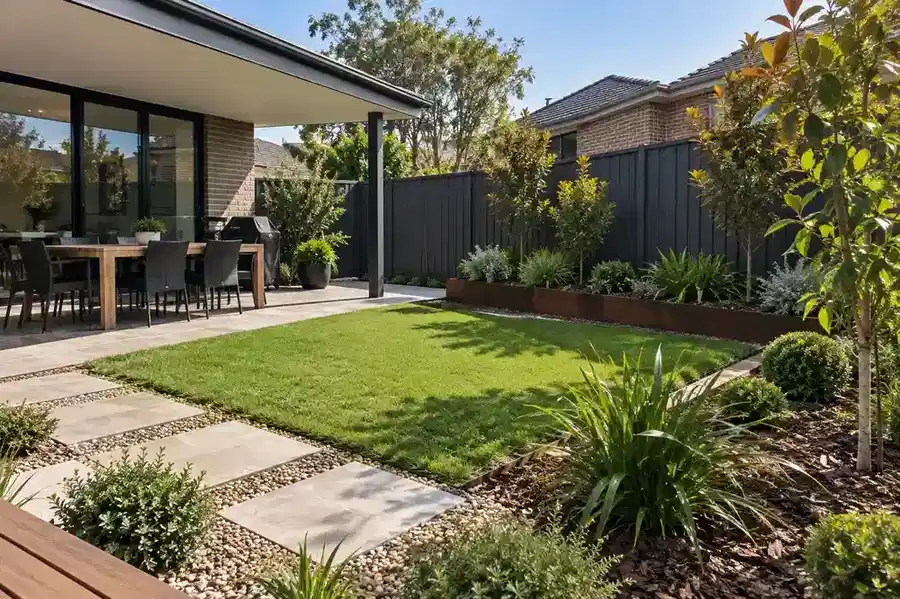
The fifth trend for 2026 is natural-looking materials paired with clear landscape structure.
Homeowners want outdoor spaces that feel relaxed but are still carefully designed. Timber, stone, concrete and paving combine with planting to create that balance.
Popular materials in 2026:
- Natural stone
- Paving (bluestone, travertine, concrete)
- Timber
- Concrete
- Gravel
- Garden edging
- Retaining wall sleepers
- Timber decking
- Textured surfaces
Using every material at once rarely works. Picking 2 or 3 that complement each other usually gives a cleaner, more consistent result.
Why do retaining walls matter?
A retaining wall does more than look good. It manages changes in ground level and can turn a sloped, unusable backyard into flat, usable space — common across Melbourne's hillier eastern suburbs.
What role does paving play?
Paving connects different parts of a garden and improves how people move through it. A well-designed path adds structure as much as it adds function.
How Do You Choose the Right Trend for Your Property?
Not every trend suits every property. The best garden isn't the one that follows all 5 trends — it's the one built around your block and your life.
Before starting, ask yourself 5 questions:
- How will I use the outdoor space?
- How much time do I want to spend maintaining it?
- How much lawn do I actually need?
- What are my drainage and soil conditions?
- What features would make the backyard more useful?
Answering these first stops you spending money on features that look good in photos but don't suit how you live.
Should you follow trends exactly?
Trends are useful for ideas, not rules. A garden should still work well 5 or 10 years from now.
You could combine a 2026 low-maintenance planting style with a traditional lawn, durable paving and a simple entertaining area. The result stays modern without dating quickly.
The 5 Biggest Landscaping Trends for 2026
- Low-maintenance landscaping
- Native and water-wise gardens
- Outdoor living and entertaining areas
- Less lawn, more functional space
- Natural materials and strong structure
All 5 trends point the same direction: outdoor spaces that are easier to use, easier to maintain, and better suited to how people actually live now.
Frequently Asked Questions
Can these trends work in a small courtyard, not just a big backyard? Yes. Smaller spaces often benefit more, since every design choice has to earn its place. A single well-placed tree, one durable material and a clearly defined seating spot can do more in 20m² than a scattered mix of features.
What's the best time of year to start a landscaping upgrade in Melbourne? Autumn and spring give plants the best chance to establish, since the soil is warm without summer's heat stress. Hard landscaping like paving and retaining walls can go ahead in most seasons, weather permitting.
Can I apply these trends gradually instead of all at once? Yes. Most gardens are upgraded in stages — for example, reworking planting and lawn one year, then adding an entertaining area or retaining wall the next. Planning the full layout upfront makes it easier to add stages later without redoing earlier work.
Planning a Melbourne Landscape Upgrade in 2026?
The best landscaping projects start with a clear plan, before you choose a single plant or paver.
Focus on 3 priorities: function (make the space work for your life), planting (choose species suited to your property), and materials (pick durable options that suit your home).
Whatever combination of trends suits your backyard, our Melbourne landscaping projects can help plan and build it — from garden design and turf through to paving, decking, retaining walls and complete landscape construction. Get in touch to talk through your ideas and get a free quote.